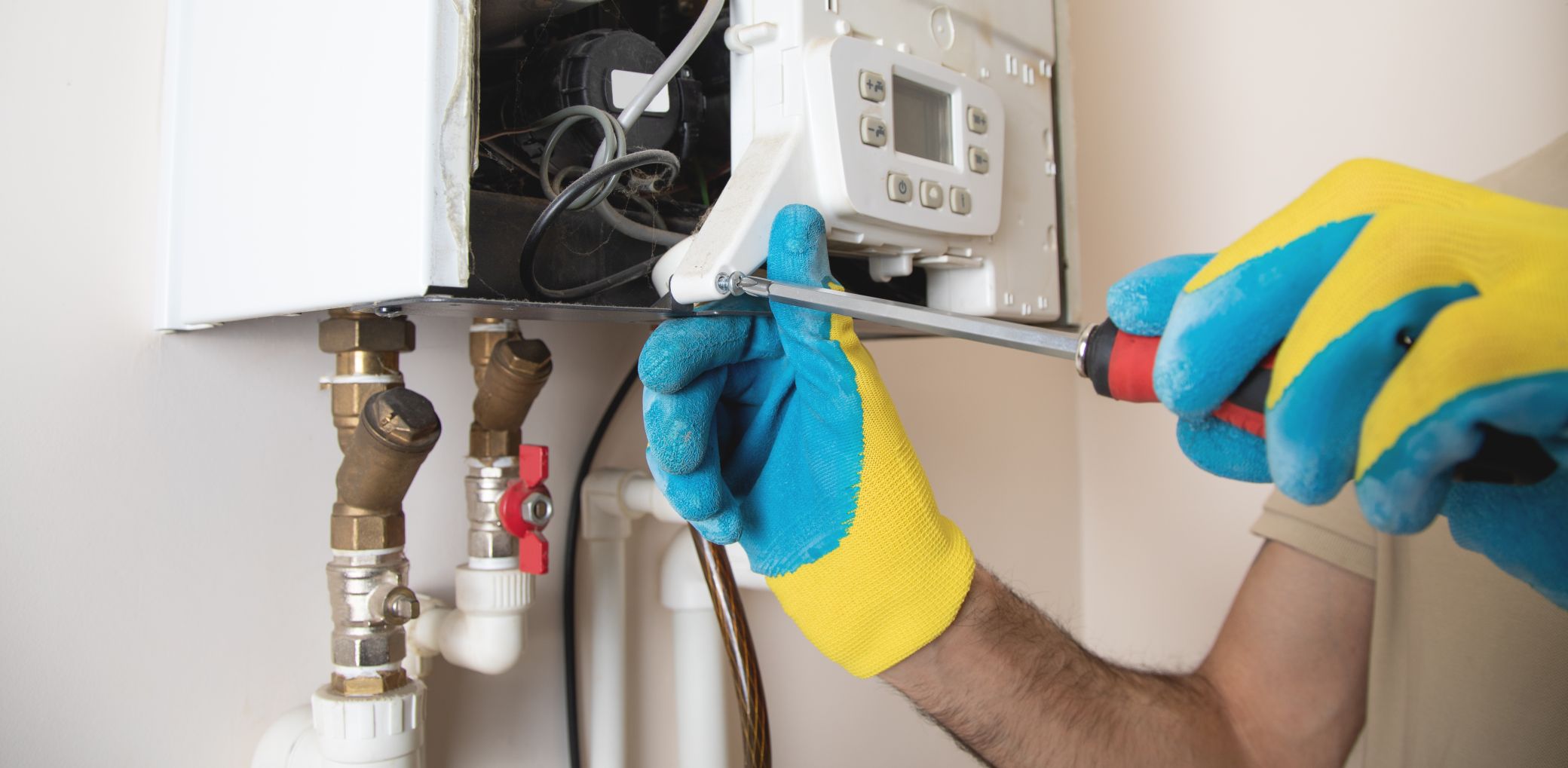
Apartment Building Gas System Ready for Winter: Checklist and 10 Warning Signs Your Gas Boiler Needs Inspection
An apartment building gas system needs inspection before the heating season: the gas boiler or central gas heating unit, the chimney or flue, ventilation, and the gas leak and carbon monoxide detectors. If the appliance has not been serviced in the last 12 months, that is a sign the inspection should happen before the cold arrives, not during it. Servicing is cheaper than a breakdown and safer than hoping it will hold.
Why is winter the biggest test for a gas system?
During the heating season a gas appliance runs longer and under the heaviest load. A boiler that sat idle over the summer suddenly starts at full power in the cold, and that is when worn seals, a clogged burner, a dirty heat exchanger and poor flue gas discharge show up.
Apartment buildings add one more factor: shared systems and neighbors. A problem in one apartment or in the boiler room can affect the whole building, whether it is a heating outage, a gas smell in the stairwell or carbon monoxide spreading through ventilation shafts.
What gas systems are typically found in apartment buildings?
- Apartment gas boiler or combi boiler: heats the radiators and domestic hot water for a single apartment.
- Building-wide gas boiler or boiler room: heats the whole building, sometimes the hot water as well.
- Gas hob and instantaneous water heater: smaller consumers that also need checking.
- Gas piping and indoor connections: often the forgotten part in apartment buildings, even though this is where leaks occur.
The same principle applies to all of them: a gas appliance and gas installation must be used and serviced according to the manufacturer’s instructions and the applicable requirements, and the work must be done by a suitably qualified specialist. Check the exact requirements and obligations on the website of the Consumer Protection and Technical Regulatory Authority (TTJA).
Winter readiness checklist
1. Appliance servicing and inspection
- Has the last service been done within the past 12 months?
- Did the technician check the burner, heat exchanger, safety controls and combustion quality?
- Is there a written service record?
2. Chimney, flue and combustion air
- A blocked chimney or flue gas outlet is one of the most common causes of carbon monoxide.
- Make sure the combustion air supply is not covered or blocked (for example when sealing new windows).
- Have the chimney and flue checked regularly by a qualified specialist.
3. Gas piping and connections
- Check that connections and flexible hoses are not worn, cracked or past their service life.
- A gas leak check is done by a specialist with suitable equipment. Never look for a leak with an open flame.
4. Pressure and heating circuit
- Check the heating circuit pressure according to the manufacturer’s instructions (condensing and conventional boilers may differ).
- Bleed the radiators if they are cold at the top and warm at the bottom.
- Watch for repeated pressure drops: they point to a leak or an expansion vessel problem.
5. Condensate drain (condensing boilers)
- The condensate drain pipe must not be blocked or frozen.
- A blocked drain can lock the appliance out, especially in freezing weather.
6. Detectors: gas leak and carbon monoxide
- Install a carbon monoxide (CO) detector near the gas appliance and by the bedrooms.
- Test it monthly with the test button, replace the batteries, and note the service life stated by the detector’s manufacturer.
- A gas leak detector gives a warning before the smell in the room is already strong.
7. Ventilation
- Ventilation grilles must be kept clear. Do not cover them or add extra seals to them.
- Kitchen air exchange directly affects how the gas appliance burns.
8. Boiler room (for a shared building boiler)
- The room must be clean, dry and free of stored items.
- The emergency shutoff and the gas shutoff valve must be accessible and clearly marked.
- The property manager or the apartment association representative should know who last serviced the boiler and when.
10 signs your gas boiler needs inspection right away
If you notice any of these, do not wait for winter:
- Servicing is overdue by more than 12 months, or there is no service history.
- The flame is yellow or orange, not an even blue.
- The appliance keeps shutting down or starts with difficulty.
- There is soot, black marks or signs of heat on or around the appliance.
- Unusual noises: knocking, whistling, bangs when it ignites.
- The heating circuit pressure drops or the same error code keeps appearing on the display.
- Radiators heat unevenly or the building takes noticeably longer to warm up.
- A gas or “rotten egg” smell near the appliance or the piping.
- Seals, hoses or connections are dried out or cracked.
- Headache, dizziness, nausea and fatigue that fade in fresh air. This can be a sign of carbon monoxide.
What to do if you suspect a gas leak or carbon monoxide
- Do not use open flame, lighters or a phone at the leak site.
- Close the gas shutoff valve if it can be done safely.
- Ventilate the rooms and leave the building.
- Call 112 and notify the gas network emergency service.
- Warn your neighbors, because in an apartment building the danger is shared.
If carbon monoxide poisoning is suspected, every minute matters: stop using the appliance and get help immediately.
When to repair and when to replace?
An old boiler is not always dangerous, but consider replacing it when:
- the appliance is old and spare parts are hard to find;
- repair costs rise every year;
- gas bills have grown without any change in consumption;
- you want better efficiency (for example a condensing boiler).
Modern condensing appliances use fuel more efficiently and come with additional safety features.
How often should a gas boiler be serviced?
Usually at least once a year or according to the manufacturer’s instructions. The best time is summer or autumn, before the heating season.
Who is allowed to service and install a gas appliance?
The work must be done by a suitably qualified gas specialist. Do not tinker with a gas appliance or gas piping yourself.
Is a carbon monoxide detector mandatory in an apartment building?
It may not be a legal requirement in every situation, but it is strongly recommended wherever a gas appliance is running. A detector is cheap, but it can save a life.
How do I know there is a problem with the chimney?
Unusual draft, soot around the appliance, mold or moisture near the flue, and frequent appliance faults are typical signs. Call a chimney sweep or a gas specialist.
Who is responsible for the shared gas boiler in an apartment building?
Usually the apartment association or the property manager. Find out who has the service contract and when the appliance was last inspected.
Wineco helps you get ready for winter
Have you already noticed one of the signs above? Then do not wait for the first frost.
- Carbon monoxide and gas leak detectors: see the suitable options in the Wineco online store.
- Gas boilers and gas heating units: ask us which appliance suits your apartment or building.
- Questions and advice: contact a Wineco specialist.
Note: this article is general information and does not replace the assessment of a gas specialist. For your specific appliance and installation, follow the manufacturer’s instructions and the applicable regulations.
Contact Us & let's check together If your Gas Appliances are ready for winter: